 Bulgarian
 English


On 11 November 1444, near Varna, by two ancient Thracian burial mounds, two armies faced each other. Both the crusaders led by the young king of Poland and Hungary, Władysław III, and the experienced general John Hunyadi, and the Ottomans led by Sultan Murad II, were aware that the battle would be a historical one. The crusaders had swiftly moved along the Danube, capturing the towns on its banks that the Ottomans had conquered. Their goal was to stop the young and aggressive power that was speeding towards Central Europe. The Ottomans, for their part, were adamant to keep the lands they had conquered.
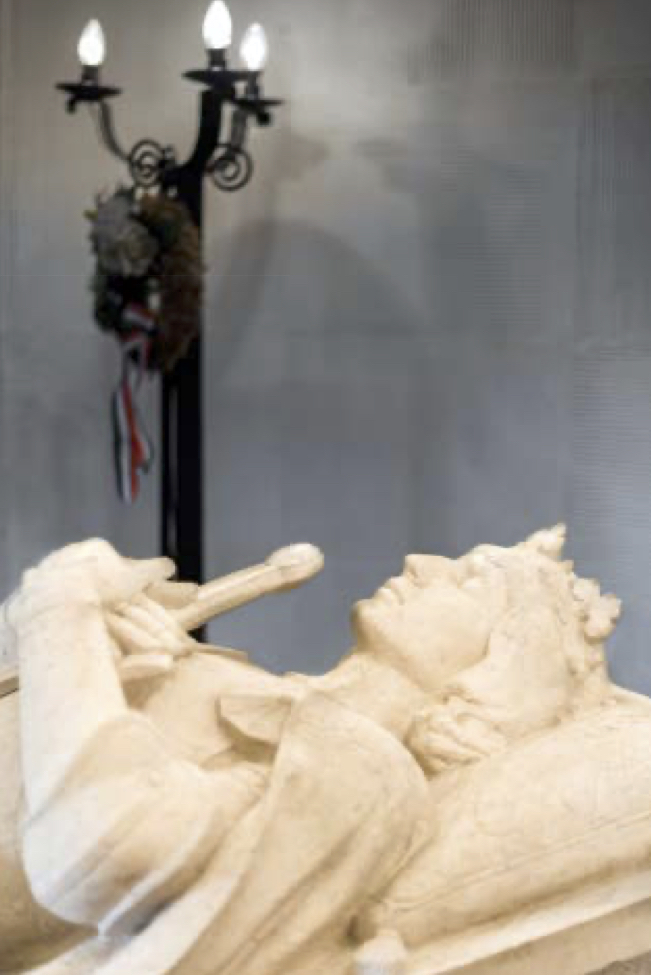
Effigy of Władysław III
The battle started and the crusaders made good advances. But then, the young Władysław III made a fatal mistake. Absorbed by the fight and eager to make history with a glorious victory, he rushed towards the tent of Murad II, aiming to take him down, personally. The sultan's guard was faster than him. Władysław and the few knights who had followed him were killed. The news of their demise sealed the end of the battle - the crusaders left the field, never to return. The Ottomans ruled the region for the following four centuries.
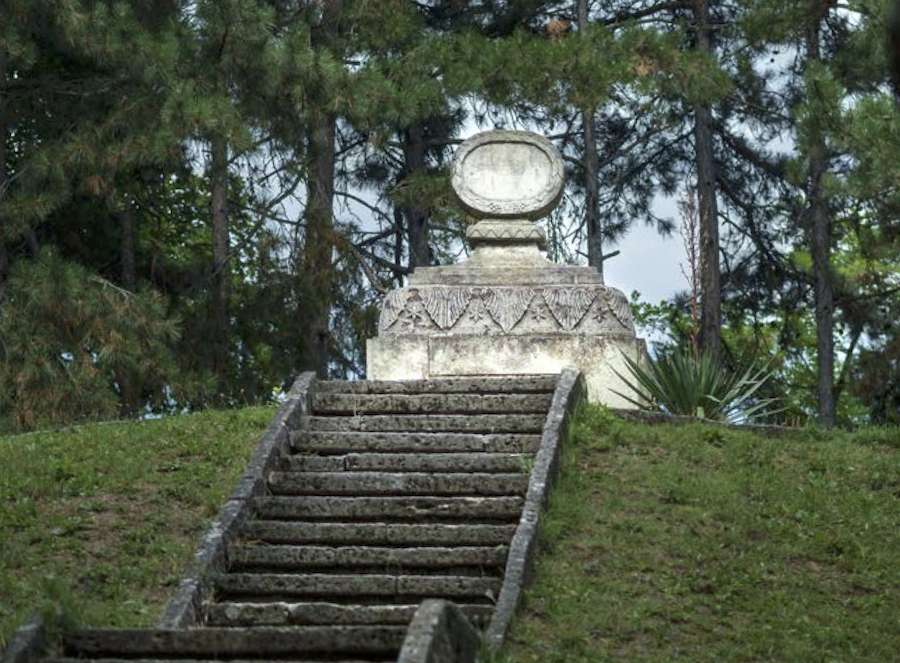
An or
The location where this fateful battle was fought was turned into a park in 1924. In 1935, in one of the Thracian mounds was built a symbolic mausoleum to Władysław III. In 1964, for the 520th anniversary of the battle a special museum was built. Today it exhibits period weapons, paintings, coats of arms. Despite its bloody past the museum park is a very pleasant place dominated by tall trees and the two mounds. The mound where Murad II stood is also marked - with a peculiar stone ornament. It was actually the top of an Ottoman water fountain that used to stay in central Varna.
